Plastic packaging is ubiquitous. The plastic film used in vegetable greenhouses is ordinary and relatively thick. When we go to supermarkets to buy vegetables, we use food-grade plastic bags. Plastic packaging is everywhere in daily life; when we buy beer and beverages in supermarkets, some are wrapped in a layer of plastic film. Many of the foods we purchase are boxed, such as milk tea and instant noodles, with a thin layer of plastic film on the outside. Are these plastic films the same?
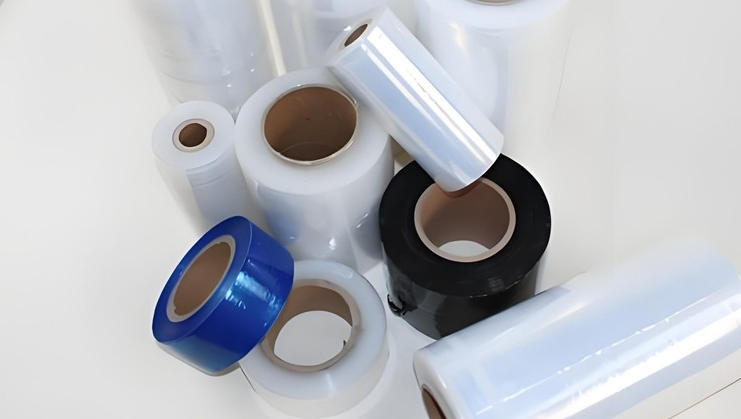
Common heat-shrinkable film materials can generally be divided into five types: POF, PE, PET, PVC, and OPS. What are the differences between them?
POF film is often used for packaging some solid foods, typically employing a fully sealed packaging method. For example, instant noodles, milk tea, and cigarettes are packaged with this material. POF stands for Polyolefin Shrink Film, which is a multilayer co-extruded polyolefin heat-shrinkable film. The middle layer is made of linear low-density polyethylene (LLDPE), while the inner and outer layers use copolymer polypropylene (PP). It is produced through a special process involving plasticization and extrusion by three extruders, followed by mold forming and bubble inflation.
Characteristics of PET heat-shrinkable polyester film: stable at room temperature, shrinks when heated (above the glass transition temperature), with unidirectional shrinkage exceeding 70%. The advantages of PET heat-shrinkable polyester film packaging include: rainproof, moisture-proof, and mildew-proof; non-recoverable, with certain anti-counterfeiting functions. PET heat-shrinkable polyester film is commonly used for beverages, dairy products, convenience foods, some electronic appliances, and metal products, with shrink labels being its most important application area.
PVC film features high transparency, good gloss, and high shrinkage rate. OPS shrink film (Oriented Polystyrene) is a new type of environmentally friendly OPS heat-shrinkable packaging material. OPS heat-shrinkable film boasts high strength, high rigidity, shape stability, excellent gloss, and transparency. It is easy to process, color, and print, with extremely high printing resolution. For trademarks that constantly pursue exquisite printing, it represents a qualitative leap. Due to its high shrinkage rate and strength, OPS film can tightly conform to containers of various shapes, making it suitable not only for printing intricate patterns but also for use with novel packaging containers of different forms. This film, compliant with food hygiene standards, is non-toxic, odorless, and grease-resistant, allowing designers to achieve eye-catching 360 label designs.
PE heat-shrinkable film is widely used for the combined and bundled packaging of liquid foods such as beer, beverages, bottled water, mineral water, condiments, and edible oil. Both ends are "bullseye" style. PE heat-shrinkable film offers good flexibility, strong impact resistance, high tear resistance, resistance to breakage, high shrinkage rate, protection against product scratches, and ease of transportation. It is also rainproof, moisture-proof, and mildew-proof. Additionally, advertisements can be printed on PE heat-shrinkable film, which is transparent and enhances product image, effectively promoting sales. The application of PE heat-shrinkable film in the liquid food industry, especially beverages, reflects shifting market demands. Heat-shrinkable film is primarily replacing traditional carton packaging, such as carton + film bag, paper tray + film bag, cardboard + film bag, or pure film bag packaging, which is becoming increasingly widespread.
With the rapid development of PET beverage bottles-such as those used for Dongpeng Special, Wong Lo Kat, Uni-President, and Coca-Cola juices and herbal teas-PE heat-shrinkable film is often used for secondary packaging. PE heat-shrinkable film is made of polyester, an environmentally friendly material.
 yancy@jiuzifilm.com
 +86 180 5605 8727(Same number on WhatsApp)